

Dr. Hugh Robertson, a professor at the University of Illinois at Urbana-Champaign, has been awarded a Certificate of Distinction from the International Congress of Entomology (ICE) for his fundamental contributions to insect genome science, involving collaborators on five continents. This prestigious award, which is only given three times (at most) every four years, will be presented to Dr. Robertson at the opening ceremony of the next Congress to be held in Daegu, South Korea in August 2012. It will include a cash prize of $5,000.
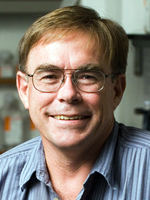
Dr. Robertson’s phenomenal mastery of insect genetics, coupled with his keen understanding of insect biology, has allowed him to become an international leader in the field of insect genomics. It can be stated without exaggeration that he is one of the field's most extraordinary scientists.
He is legendary as probably the only person who has played a role in virtually every single insect genome project, starting with the first (Drosophila melanogaster). He has unparalleled understanding of genome organization and structure as a whole, in addition to deep knowledge of key gene families, notably the chemorceptors. It is always the case that the genes that Robertson works on in any genome project are the best analyzed of any other genes in that genome. Everyone who works on any insect genome knows and respects Hugh Robertson. To cite one example, Dr. Robertson played a key role in the annotation of the honey bee genome, notably contributing to manual superscaffolding of chromosomes 12-16, and his work has inspired and provided a variety of invaluable honey bee genomic tools for use by the entire entomological community, blazing a trail in comparative genomic analysis.
He contributed similarly to the annotation of the genomes of two mosquitoes (Anopheles gambiae, Aedes aegypti, the head louse Pediculus humanus, the red flour beetle Tribolium castaneum, the pea aphid Acyrthosiphon pisum, and several ant genomes; his collaborators on these projects live in almost two dozen countries (Canada, England, Italy, Spain, France, Germany, Switzerland, Denmark, Belgium, Sweden, Russia, Czech Republic, Slovakia, Israel, Japan, China, Korea, Australia, New Zealand, Brazil) on every continent except Antarctica. Most recently, Dr. Robertson dedicated his sabbatical leave to assisting with the tsetse fly genome, a project based in his native South Africa and as such the first insect genome project that has involved developing nations in a leadership role since its inception.
Beyond contributing to collaborative genome annotation efforts, Dr. Robertson has become a leading authority on the exceptionally large and complex gene family of chemoreceptors in insects and other invertebrates, which play a critical role in food-finding and mate location and thus are likely targets for species-specific sustainable pest management approaches. Dr. Robertson began this effort using sequence information available from nematode genome projects to analyze the evolution of this extremely large family of genes, with a focus on the loss (frequent) and gain (rare) of introns, non-coding regions of DNA. As insect genomes came online, Dr. Robertson thus had laid a solid foundation for understanding the evolution of this huge gene superfamily in insects.